
Month by month
| Months | Weather | What it looks like |
|---|---|---|
| January – February | 5–15 °C, dry, frequent fog | Cold and quiet. Cloud sits in the valleys and the passes clear late morning. Tet closes some businesses for a week. |
| March – April | 15–25 °C, dry, clear | Plum and pear blossom, then green shoots in the terraces. The most comfortable riding of the year. |
| May | 20–30 °C, first storms | Hot in the valleys, still dry most days. Rice planting begins and the terraces fill with water. |
| June – August | 22–32 °C, wet | Everything is green and dramatic. Afternoon storms are normal, landslides possible, and the light after rain is extraordinary. |
| September – October | 18–28 °C, drying out | Golden rice terraces and clear passes. The busiest and, for most people, the best window of the year. |
| November – December | 10–20 °C, dry | Buckwheat flowers across the plateau in November. Cold mornings, hard blue skies, thin crowds. |
If you are choosing on one thing
Photographs
Mid-September to mid-October. The terraces are gold, the air is clear after the rains, and the light on Ma Pi Leng in the afternoon is the reason people book this trip.
Comfort
March, April or November. Warm enough to ride in a light jacket, dry enough that you never unpack the poncho, and quiet enough to get a private room without booking weeks ahead.
Flowers
November for buckwheat, which turns whole hillsides pink and white, and March for plum and pear blossom around Dong Van.
Solitude and low prices
June to August. You will get wet, but the plateau is empty, the waterfalls are full and the valleys are as green as they ever get.
What the weather actually does to a trip
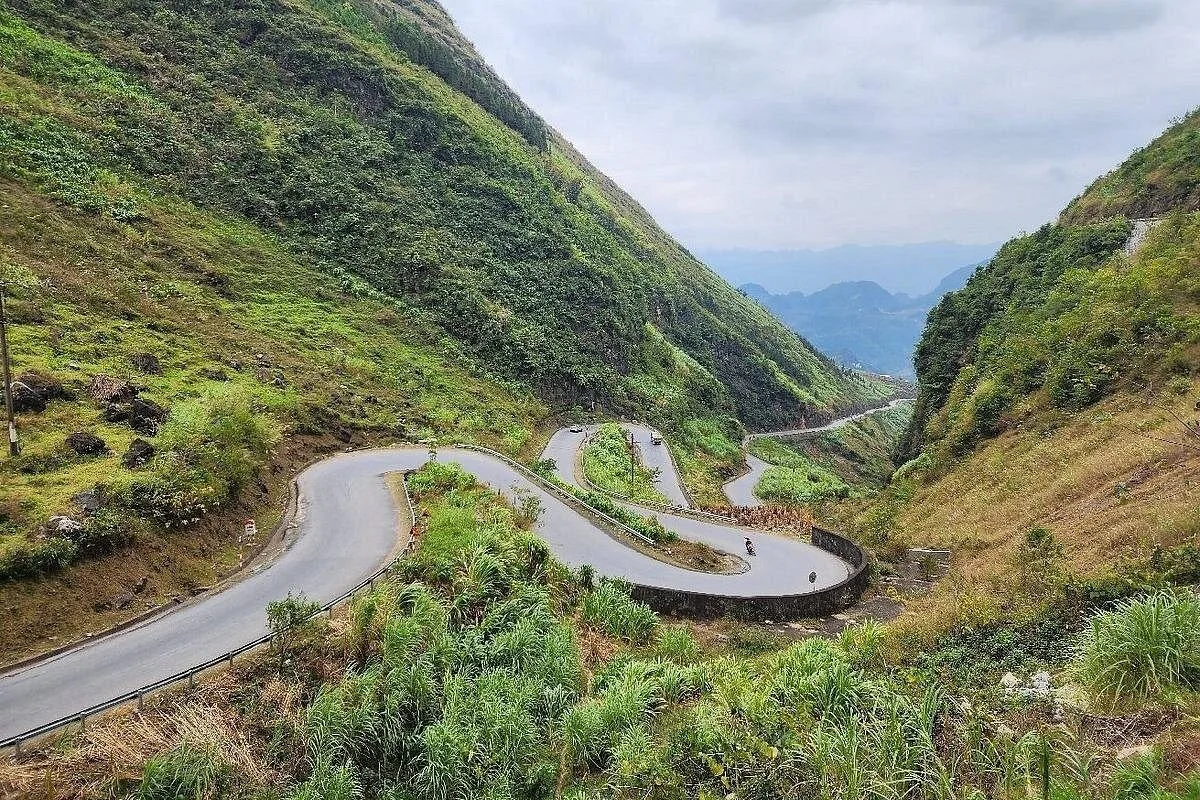
Rain rarely cancels anything. Roads are sealed, guides carry ponchos, and a wet Ma Pi Leng with cloud pouring through the gorge is a better photograph than a clear one. What does change plans is a heavy multi-day storm, when landslides can close a section of road — in that case we reroute, usually without losing a stop.
Fog is the more common nuisance, mainly December to February. It burns off through the morning, so guides simply reverse the order of the day and put the high passes in the afternoon.